
 Facebook
 Google
 GitHub
 Linkedin
World’s Largest Electric Ferry Carries 275 Tons of Batteries
The massive Incat Hull 096 all-electric ferry includes a 40 MWh battery storage system.
Maritime shipping is responsible for approximately 3% of global carbon emissions. This figure has remained relatively stable, with estimates ranging from about 2.8 to 3% of total global greenhouse gas emissions. If the shipping sector were considered a country, it would rank among the world’s top emitters, highlighting its significant contribution to climate change.
While several measures have been proposed and implemented globally to reduce maritime shipping emissions, including cleaner fuels and revised fuel standards, electrification may be the most effective. The transition to electric ships and boats could reduce emissions, especially in vessels like ferries, which make frequent trips.
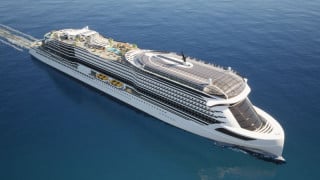
The world’s largest electric ferry—powered by 275 tons of batteries—launched its regular route from Uruguay to Argentina. It can carry 2,100 passengers and could save more than 30,000 tonnes of carbon dioxide emissions each year.
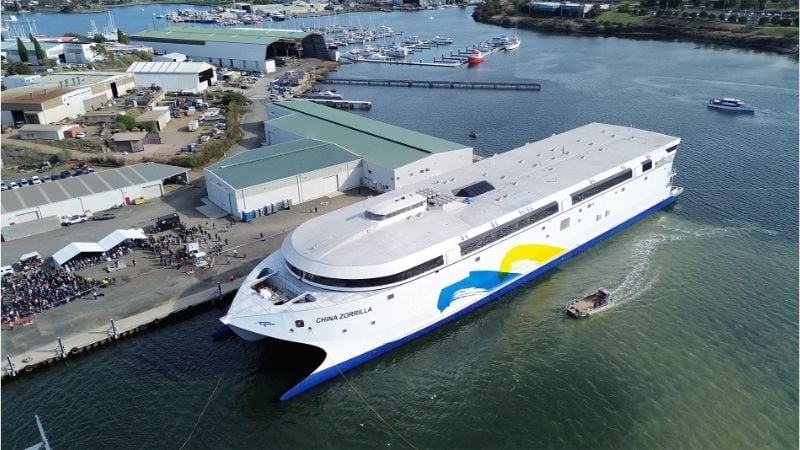
World’s largest ferry. Image used courtesy of Incat
Ferry and Ship Electrification
Electric propulsion for ferry boats and commercial shipping has advanced rapidly in recent years, with Norway leading in operational electric ferries, and other countries like Germany, Sweden, and Australia rapidly expanding their fleets. The electric ferry market is projected to grow at over 12% annually, reaching $3.5 billion by 2033, driven by environmental regulations, operational cost savings, and technological advances in batteries and charging systems. About 70% of new ferry orders now specify electric propulsion, while urban centers such as Hong Kong, Stockholm, and Barcelona have integrated electric ferries into public transport, with strong passenger demand and environmental benefits. Hybrid systems combining batteries with alternative fuels (like methanol) are also under development for longer-range and offshore vessels.
Electric ferries offer dramatically reduced emissions, lower maintenance and operational costs, quieter operation, and an improved passenger experience. Barriers remain, however, including high upfront costs, battery range limitations for long-distance shipping, and the need for expanded charging infrastructure at ports.
Largest Ferry Tech Details
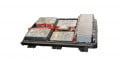
The world’s largest fully electric ferry is the China Zorrilla, launched by Tasmanian shipbuilder Incat. Measuring 130 meters in length, this zero-emissions vessel is equipped with over 250 tonnes (250,000 kg or just over half a million pounds) of batteries, providing an unprecedented 40 MWh of energy storage—four times larger than any previous maritime installation. The ferry will carry up to 2,100 passengers and 225 vehicles and is set to operate between Buenos Aires, Argentina, and Uruguay for the South American operator Buquebus. Its propulsion system uses eight electric waterjets supplied by Wärtsilä. The vessel also features a 2,300 square meter retail deck, the largest shopping space on any ferry worldwide.
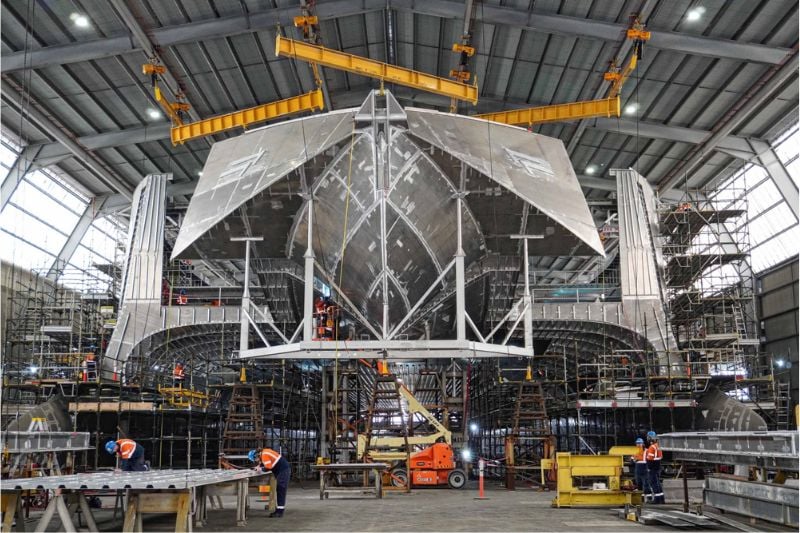
Construction of the China Zorilla’s hull. Image used courtesy of Incat
The distance for the route between Uruguay and Argentina is approximately 100 to 129 nautical miles (about 185 to 239 kilometers) one way, depending on the specific ports and route taken. This makes it one of the longest fully electric ferry routes in the world. The maximum speed of the China Zorrilla is 29 mph (46 km/h), which is approximately 25 knots.
The ferry was named China Zorrilla to honor Concepción “China” Zorrilla, a beloved Uruguayan actress, director, and cultural icon renowned across both Uruguay and Argentina. The inspiration for the name is deeply symbolic: China Zorrilla's life and career served as a cultural bridge between the two countries, mirroring the ferry's role in connecting Buenos Aires, Argentina, and Montevideo, Uruguay.
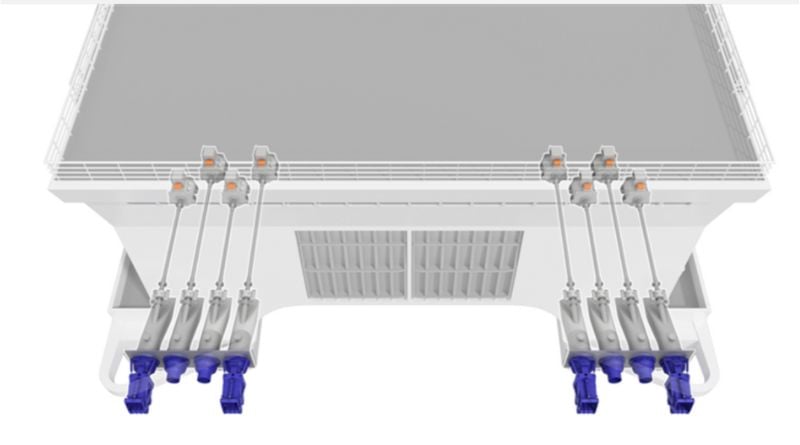
Waterjet propulsion. Image used courtesy of Wärtsilä
The China Zorrilla’s charging infrastructure at both Buenos Aires and Montevideo ports is built around ultra-high-capacity DC fast chargers, specifically designed to handle the vessel’s massive 40 MWh battery system. These chargers can deliver several megawatts of instantaneous power, enabling the ferry to recharge from 20% to 80% (about 24 MWh) in just 40 minutes during turnaround between trips.
Electric Infrastructure Needed
To support rapid charging without overwhelming the local power grids, both ports have undergone significant upgrades, including the installation of grid-scale buffer batteries. These buffer batteries store energy from the grid during off-peak times and release it quickly during ferry charging, smoothing out demand spikes and ensuring grid stability. Additionally, overnight charging takes advantage of lower electricity demand and a higher share of renewable energy, especially in Uruguay, which has a renewables-heavy grid.
Buquebus, the ferry operator, has invested around $14 million in these charging stations and supporting transmission infrastructure, ensuring reliable and efficient operation for the world’s largest electric ferry.
The exact number of daily trips the China Zorrilla will make has not been officially specified. However, given the ship’s large capacity and the significant investment in rapid charging infrastructure at both ports, it is expected to operate frequent daily services, likely making several round trips each day to meet passenger and vehicle demand. The precise schedule will depend on operational logistics, battery charging cycles, and demand, but multiple daily trips are anticipated.









I don’t understand the benefit of “zero emission” in this case. I would welcome an explanation. This article sounds like a fairy tale, no disrespect to the author, as it’s only point is claiming zero emission. Truthful as that is, a dive into the “total lifespan emission” (from birth to burial) would be more telling (and honest). 250T / 40mWhr battery bank is massive! Publishing the EIR for that would be interesting. What is the longevity of the bank? For reference, I work as an EI&C technician at a 35mW power generating facility. Aside from the battery bank, a 24mW charging point to achieve 80% in 40 minutes is very impressive. However, the burden to the existing distribution infrastructure must be significant. As the article points out, “significant upgrades” and “grid scale battery buffers” were required at a cost of $14M. It surprises me that nobody finds these numbers massive (if not bordering on absurd). I don’t think anyone should honestly claim “zero emissions” and leave it at that without an honest evaluation of the significant amount of distribution grid power required ultimately for propulsion (via charging). If shore power is pure PV solar, that would be a massive farm that would never experience a cloudy day.
I would be interested to read a follow-up article which evaluates the complete life cycle, distribution grid issues and battery performance/life span.