 Facebook
 Google
 GitHub
 Linkedin
Energy Storage’s Next Metric: Battery Readiness
Advances in battery management are helping operators verify that stored energy is ready when the grid needs it.
For me, the clearest test of an energy storage system’s reliability is the moment it’s called on. Until then, it may hold energy in reserve for hours. Then demand spikes or renewable generation drops, and the system is asked to deliver. At that moment, its installed capacity matters less than a more immediate question: Is the stored energy actually ready?
This question carries far more weight than it once did. Five or six years ago, battery storage played a much smaller role on the grid, and many early systems focused on ancillary services such as frequency regulation. Today, storage shifts large amounts of energy from hours when solar and wind are plentiful to hours when they are not, and more of the grid depends on that energy being there. At the same time, electricity demand keeps rising, and grid conditions are becoming harder to predict.
A system may be designed to deliver several hours of power, and operators need confidence it will do so every time it is called on, over a service life that can run 15 to 20 years. The designers and operators I talk with want to verify that before the moment arrives. That is why I see battery readiness as the next metric for storage performance. Battery readiness means knowing each cell's condition well enough to say what the system can deliver at a given moment.
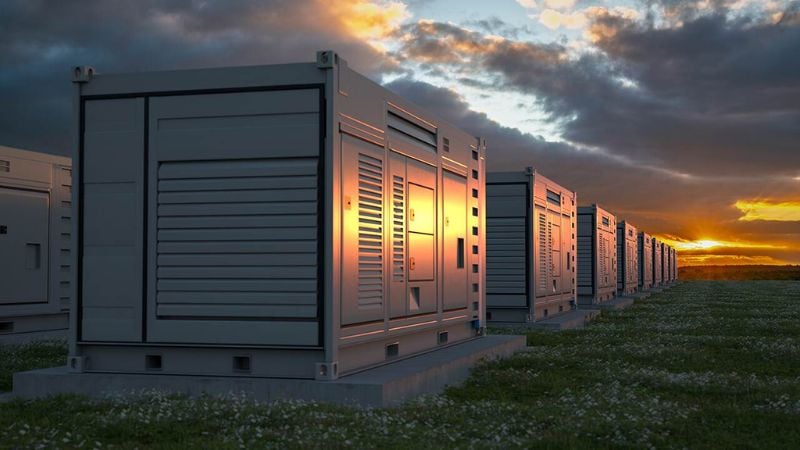
Battery energy storage system. Image used courtesy of Texas Instruments
Why Readiness Starts at the Cell Level
A grid-scale energy storage system can rely on thousands of individual cells. No two cells experience exactly the same conditions, and over time those differences shape what the whole system can deliver.
Battery management systems have long relied on voltage, current, and temperature measurements. Those measurements are fundamental, as they show how the battery is operating and protect cells from conditions outside their limits. But they describe the cell from the outside, and electrochemical changes inside a cell can begin well before they show up at the surface.
Voltage readings also blur how much charge a cell holds and how much it has aged. As a cell ages, it loses capacity, so the same voltage reading no longer corresponds to the same amount of stored energy. From voltage alone, an operator cannot tell how much of a change reflects state of charge and how much reflects aging. That uncertainty can leave operators holding back usable energy or discharging cells more deeply than they should.
Safety raises the stakes further. In thermal runaway, a failing cell heats itself faster than it can shed that heat, and the damage can spread to neighboring cells, modules, and potentially the whole system. A temperature sensor registers the problem only once heat reaches the surface. By then, the process may already be irreversible.
Looking Deeper into Battery Health
Electrochemical impedance spectroscopy (EIS) addresses both of these gaps. EIS applies a small AC signal to a cell across a range of frequencies, typically from a few millihertz to several kilohertz, and measures how the cell responds. That impedance response reveals what is happening electrochemically inside the cell, including changes associated with developing faults that may not be apparent in voltage, current, and temperature measurements.
Most important for readiness, EIS can separate the effects of aging from the battery’s state of charge. Operators gain a clearer picture of how much energy a cell holds and how its capacity has changed over time. That information helps determine what the system can actually deliver.
Texas Instruments explains electrochemical impedance spectroscopy. Video used courtesy of Texas Instruments
EIS works alongside conventional sensing. Those measurements continue to protect the system in real time, and impedance measurements add the internal view.
For decades, this kind of measurement required specialized lab equipment. Today, that capability can be integrated into the battery-monitoring electronics themselves. That puts cell-level visibility into storage systems operating in the field.
Once deployed, EIS can check cell health even between dispatches, when many storage systems sit idle for long stretches. Operators can then confirm a system is ready before it's called on.
From Monitoring to Condition-Based Decisions
Earlier visibility moves battery management toward a more predictive model. A warning that arrives a minute before thermal runaway leaves little room to act. A warning arriving an hour before gives the operator time to address the problem before it spreads. The operator can disconnect the affected module while the rest of the system keeps running, then send a technician to replace it before a fault spreads. Service decisions follow the battery's measured condition instead of an alarm threshold.
The same measurements shape how operators use their energy. An operator holding megawatt-hours of stored energy after sunset, when solar output falls and electricity prices rise, is in a valuable position. That value depends on knowing how much energy is available and how deeply the cells can be discharged without causing long-term damage. Those decisions extend battery life and determine how reliably that capacity shows up when the grid needs it.
Connecting Battery Readiness to the Grid
Readiness also shapes how much value storage brings to the grid as a whole. In markets with heavy renewable penetration, operators still curtail generation when supply outstrips demand. Reliable storage lets operators capture that low-cost energy and deliver it later.
Storage increasingly covers peak demand and provides backup power, and both roles depend on the system being ready when called. Data centers are the extreme case, since their operators want power every hour of every day, and they don't want energy availability to limit what they build.
Increasingly, that power is generated and stored close to where it’s used. Generation and storage have spread from utility-scale installations to industrial sites, and data centers themselves. Systems at the grid’s edge must monitor changing conditions and respond locally as demand and generation fluctuate. To do that well, they need accurate information at the cell level.
Readiness for the Next Phase of Storage
Energy storage has spent the past several years proving it can scale. The next test is whether it can deliver on demand as it takes on more of the grid’s work.
Cell-level visibility will shape how the industry meets that test. We’ll gain a clearer record of how cells age under real conditions, and battery systems will increasingly draw on that history to anticipate degradation before it impacts performance. As that visibility spreads, operators will be able to measure readiness directly. And with that level of insight, I expect readiness to join capacity as a fundamental metric of storage performance.